Teeka
Four characters, and a system that keeps them consistent
- Client
- Teeka
- Sector
- FMCG — confectionery
- Role
- Mo Group
- Dates
- Jan 2025 – Present
A mascot is a drawing. A character is a set of rules about how someone behaves.
The brief
Teeka is a confectionery brand — chocolate and sweets, sold to children and bought by parents. The brief was to build a complete character system for it: from visual research through to animated stories.
The hard part in children’s brand work is not drawing something appealing. It is consistency. A character that behaves differently in every piece stops being a character and becomes decoration, and children notice the inconsistency faster than adults do.
The idea
A mascot is a drawing. A character is a set of rules about how someone behaves.
So the work went past appearance into behaviour: what each of the four wants, how they speak, what they do when something goes wrong. That is what makes a reel recognisable as Teeka even when the product is not on screen.
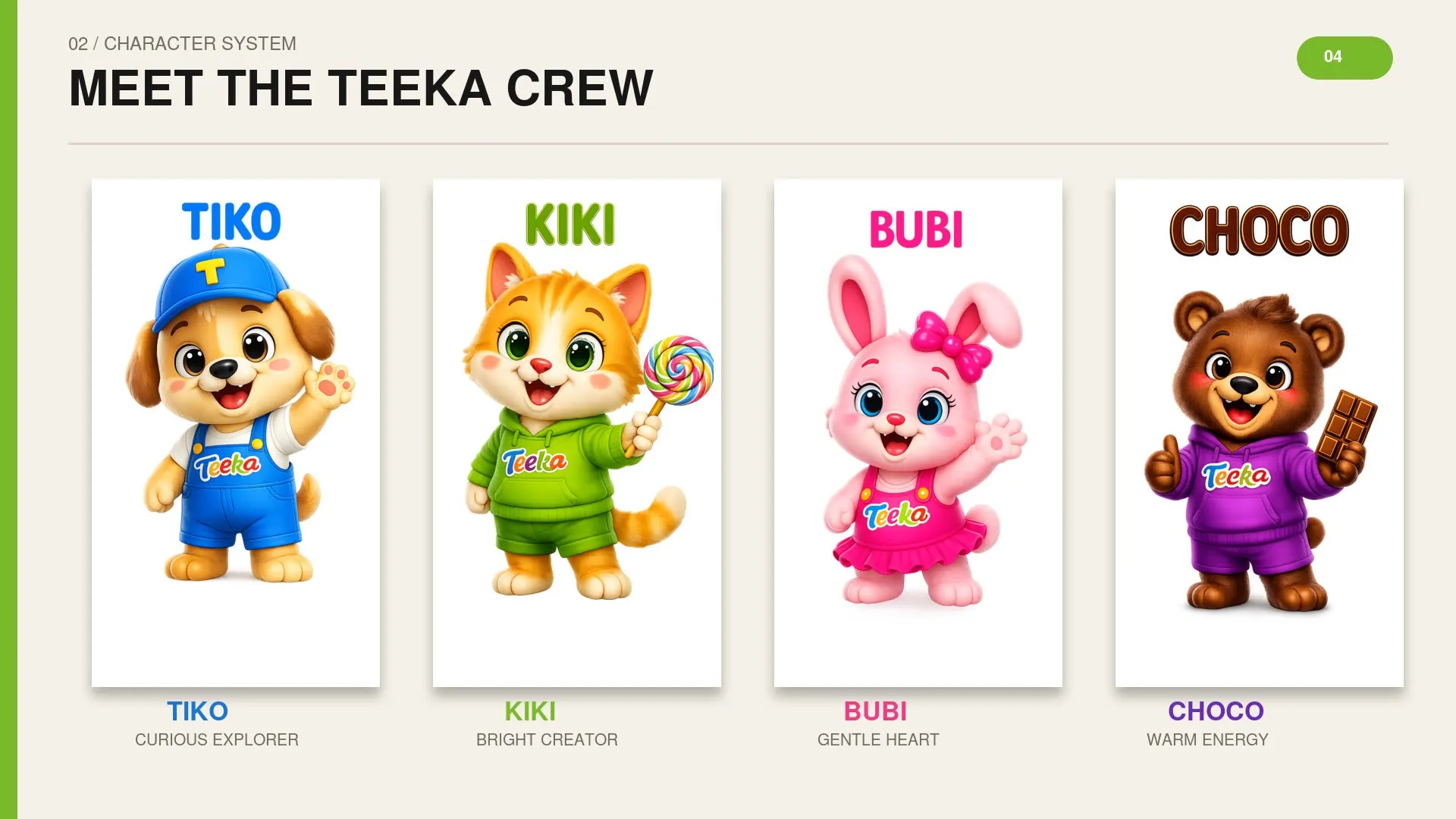
Four characters, each given a trait rather than just a look: Tiko the dog is the curious explorer, Kiki the cat the bright creator, Bubi the rabbit the gentle heart, and Choco the bear is warm energy — and carries the chocolate, which makes him the closest thing the cast has to the product itself.
Development, not decoration
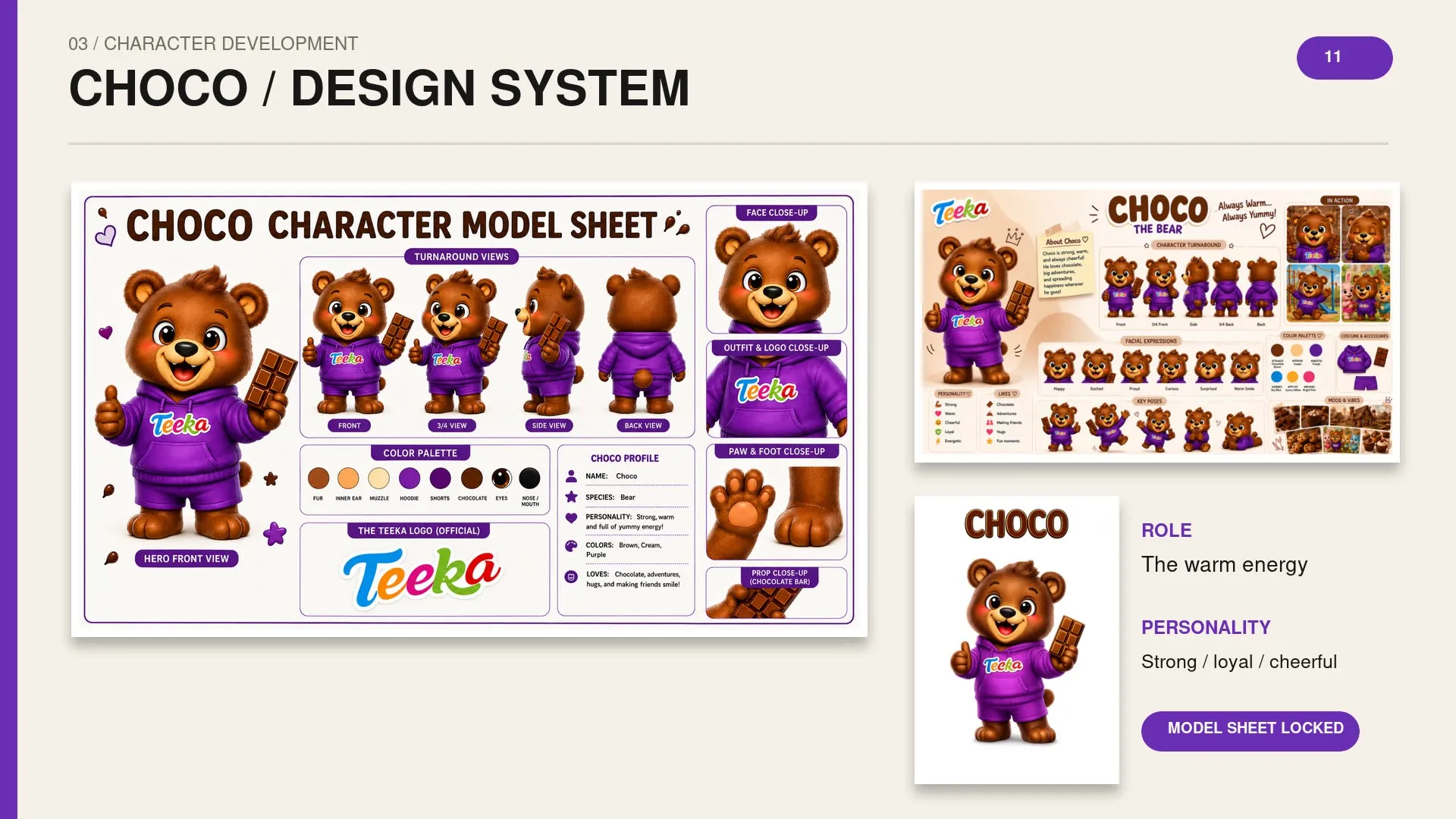
Each character went through development sheets and sketch exploration before being fixed. That stage is what makes the later consistency possible: expressions, proportions and silhouette are decided once, then held.
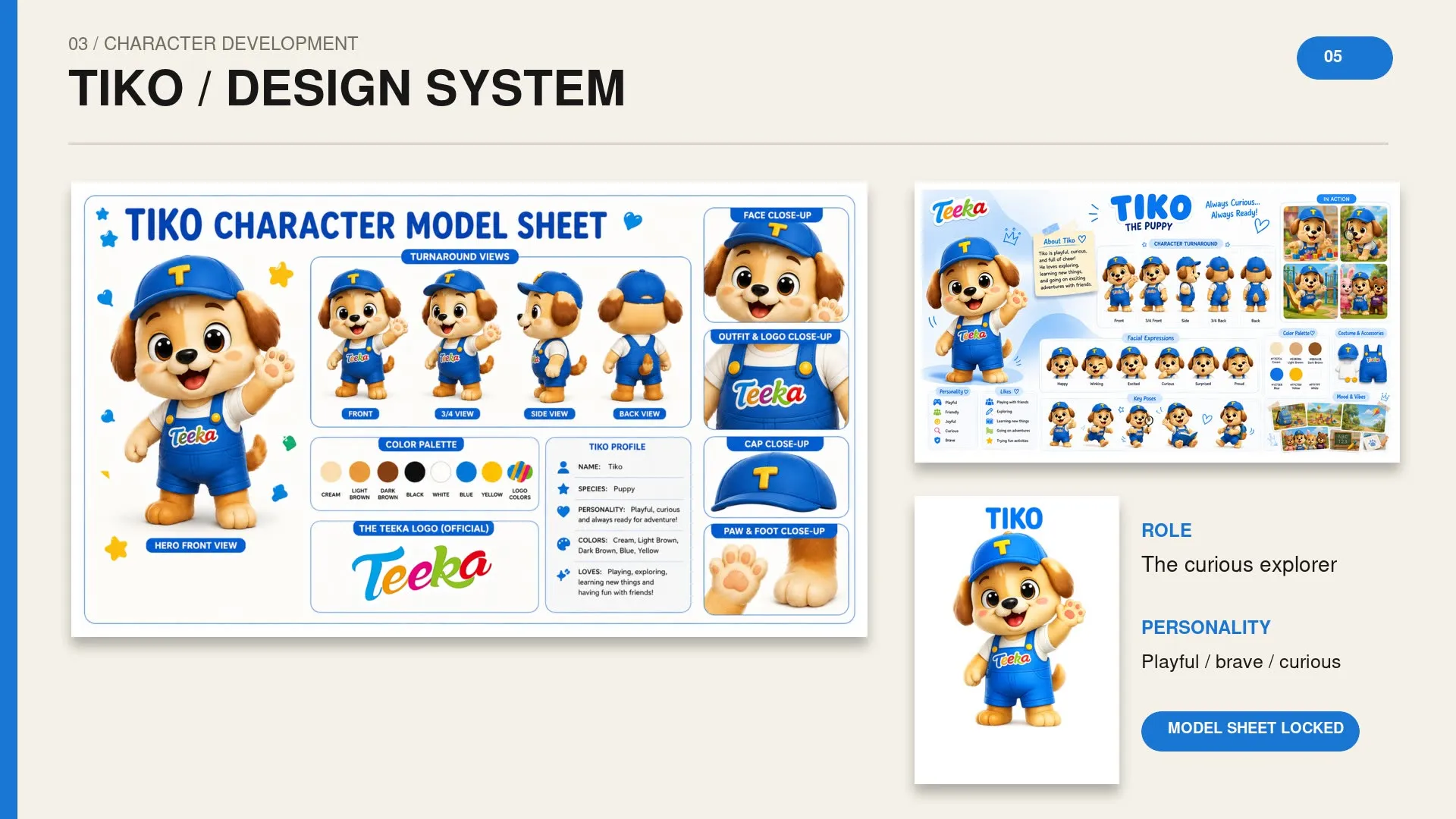
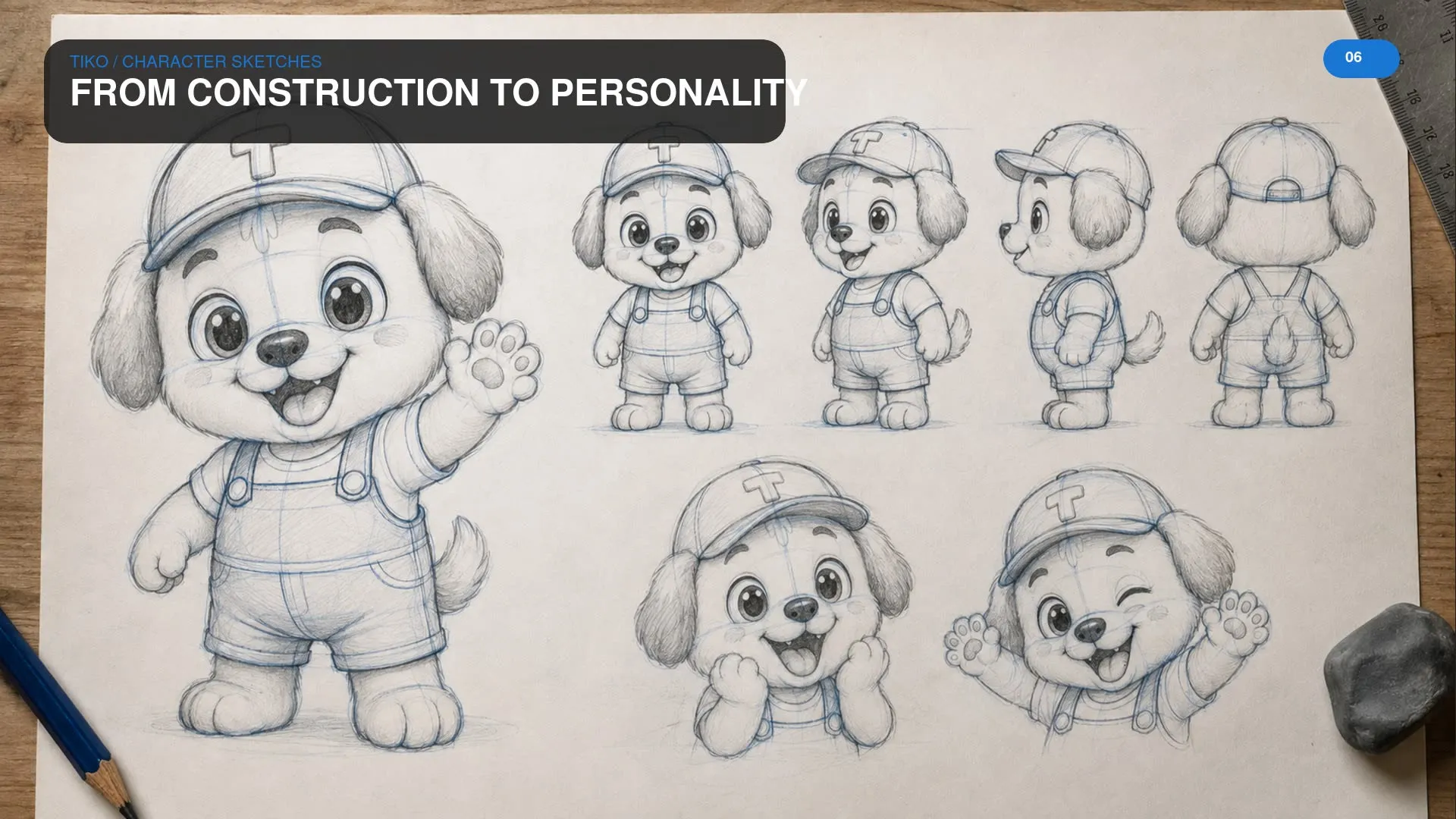
The four are built to read as a group. Same construction logic, same eye scale, same weight of outline — so a lineup looks like one family rather than four separate commissions.
The part that is actually the work
Stories built around kindness, confidence and teamwork — and storyboarded properly.
Each reel is specified before anything moves: shot type, action, per-character dialogue in Arabic, on-screen text, timing to the second, music and SFX notes. Named episodes rather than generic clips — Bubi — Gratitude, Kiki — Character Advice, Tiko 01.
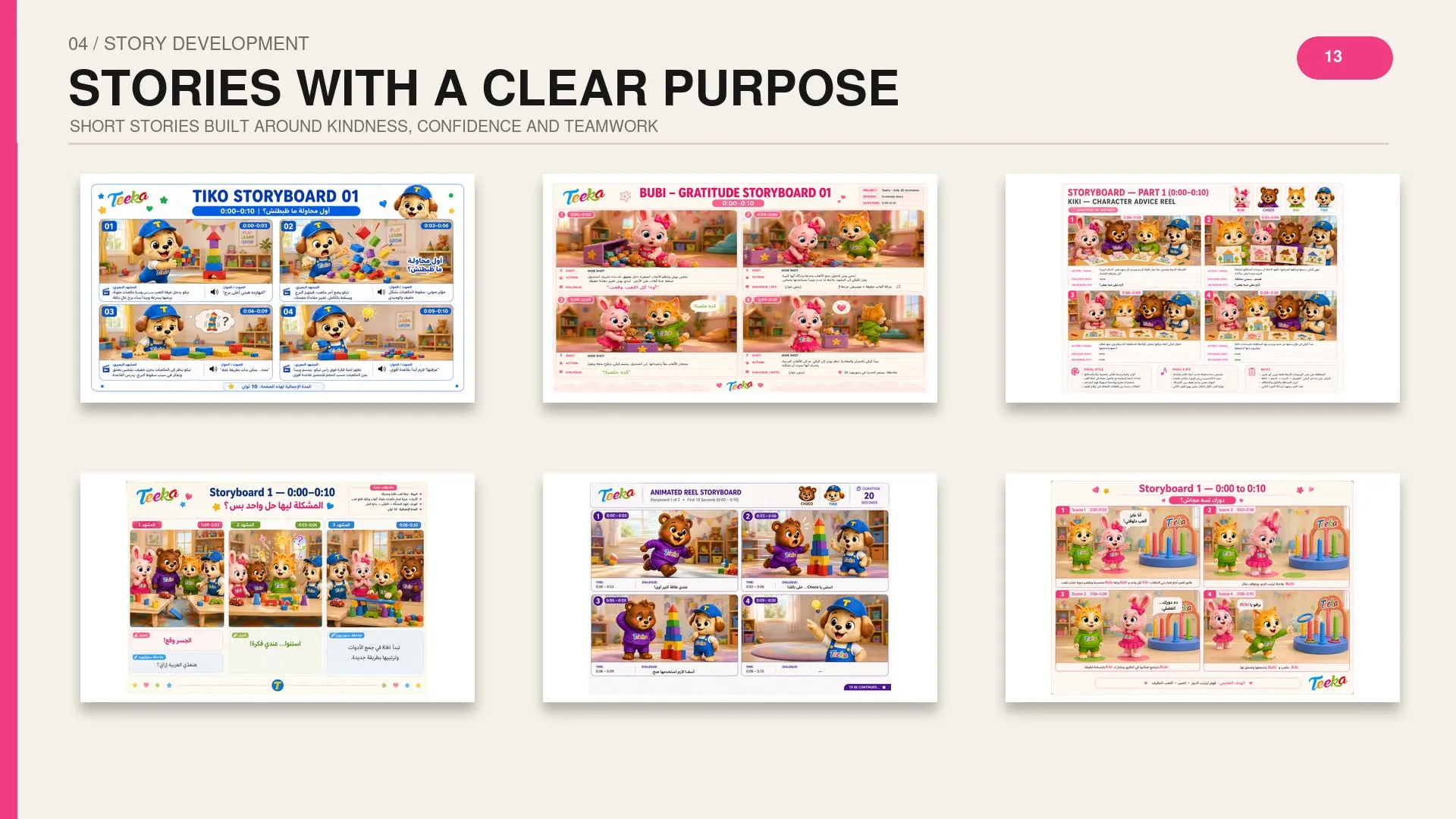
This is the difference between a brand that owns characters and a brand that commissions clips. The storyboard is where the story, the pacing and the dialogue get decided, and it is the document the whole production is held to.
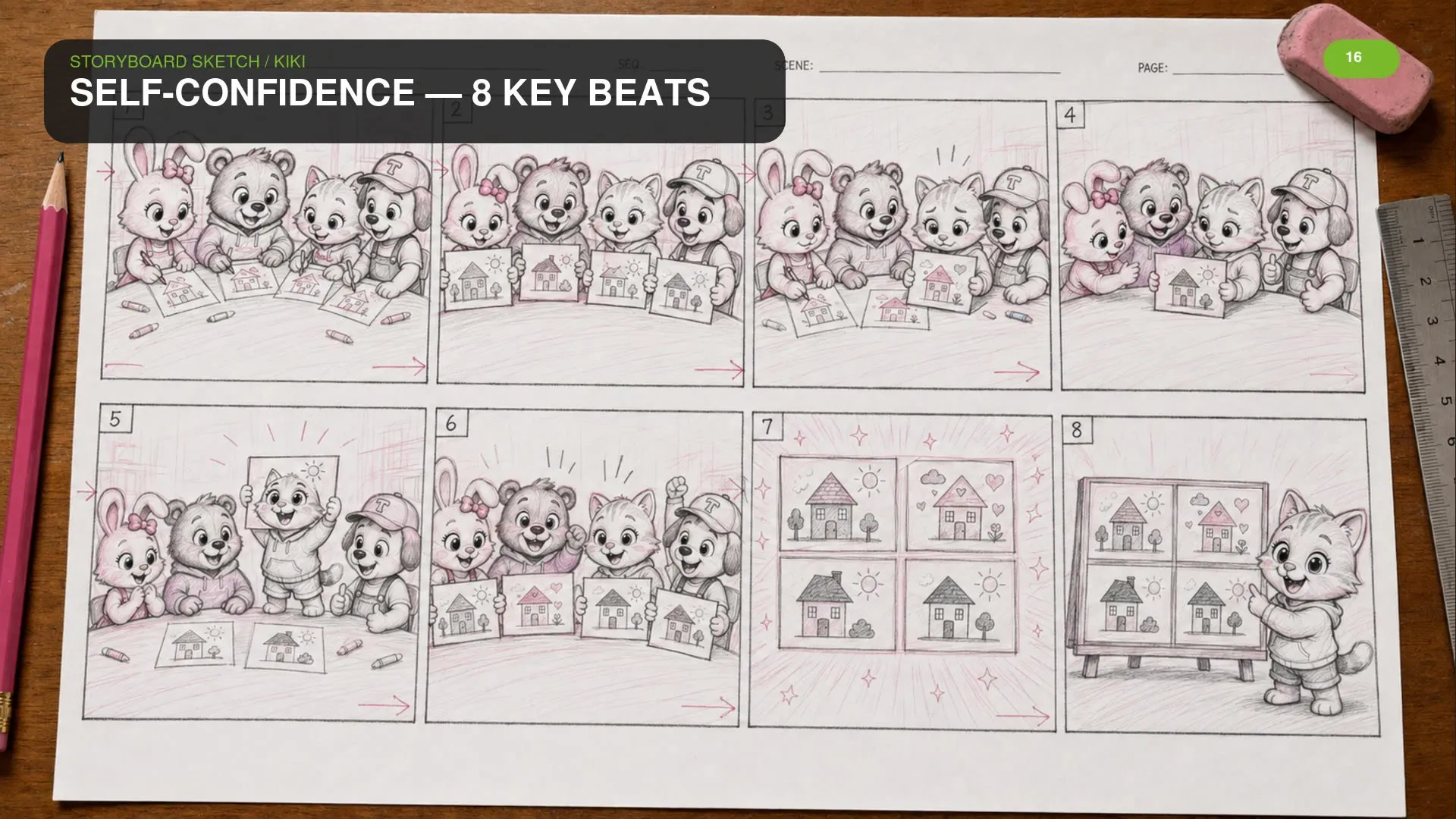
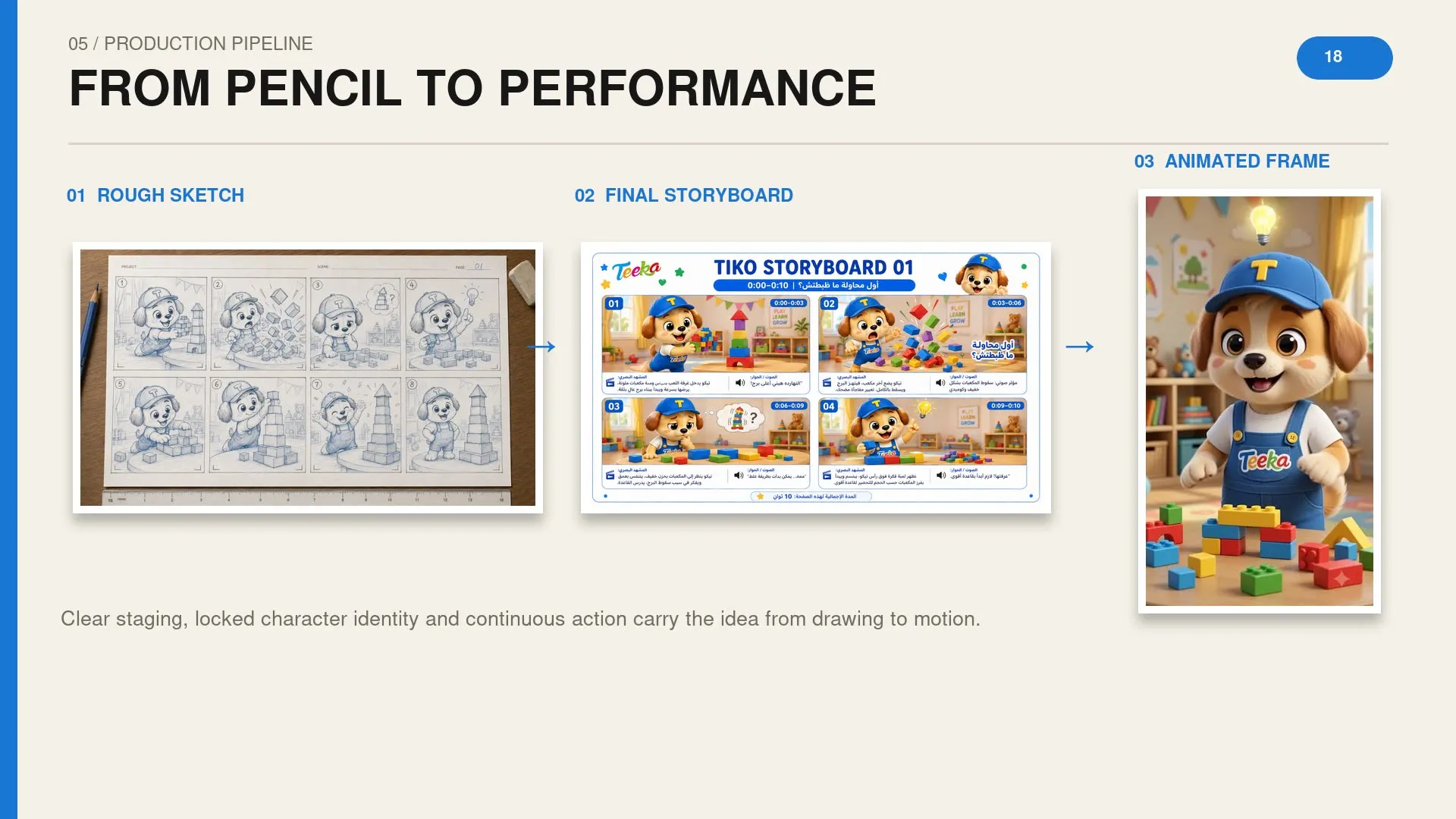
What shipped
Four original characters with development and sketch sheets, a storytelling system built on three themes, twenty-one storyboards, and eleven finished animated reels — with the Arabic scripting and timing specified board by board.